Infrastructure That Refused to Die: The Organizational Forces Keeping Obsolete On-Premises Systems Alive
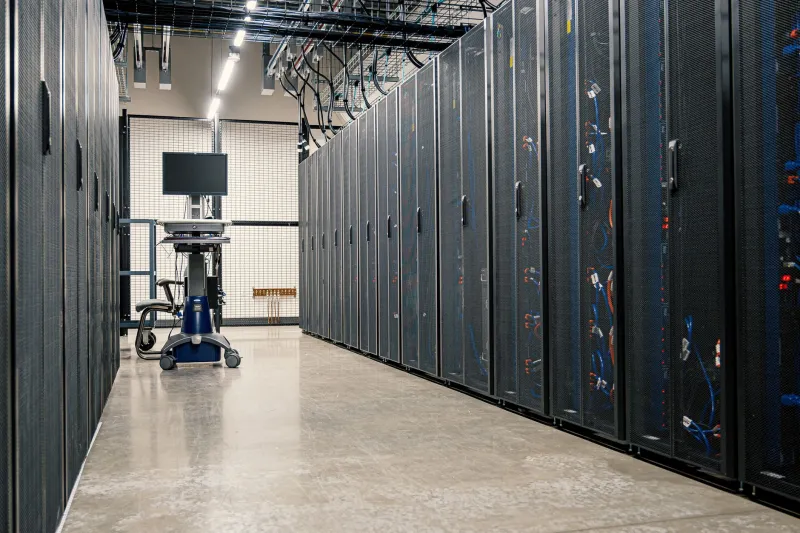
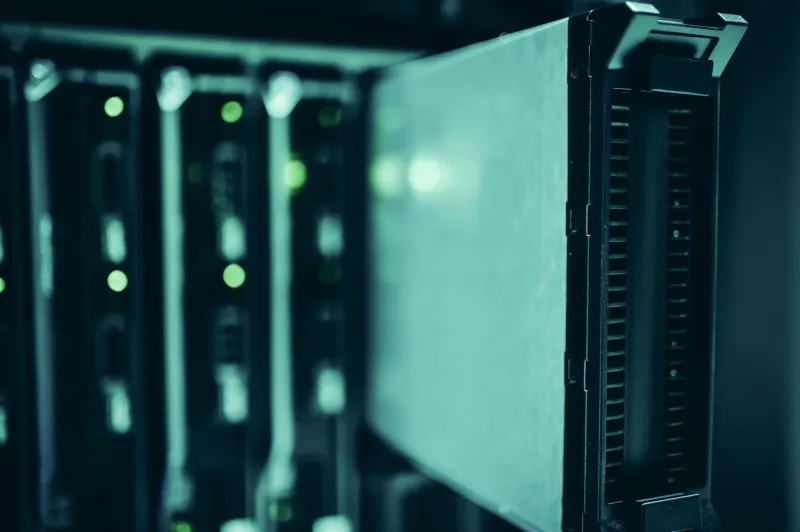
Every enterprise migration roadmap contains a category of infrastructure that carries the same quiet designation: temporary. These are the on-premises servers, legacy application hosts, and aging storage arrays that were never intended to survive the transition to cloud or modernized hybrid environments. They were supposed to serve as bridges — functional long enough to support cutover, then quietly powered down once the new architecture proved stable.
For a significant share of US enterprises, that moment never arrives.
Instead, what was once characterized as transitional infrastructure has calcified into something far more permanent. The servers remain racked. The maintenance contracts keep renewing. The teams responsible for decommissioning quietly shift their attention elsewhere. And the organization continues paying — in licensing fees, in power consumption, in security exposure, and in the compounding cost of maintaining systems that were never designed for longevity.
This is not primarily a technical failure. It is an organizational one.
The Anatomy of a Decommissioning That Never Happens
When enterprises conduct post-migration audits, the gap between planned and actual decommissioning timelines is frequently measured not in weeks, but in years. Systems scheduled for retirement at the twelve-month mark of a migration initiative are often still active at the three-year mark — and in some cases, considerably beyond that.
The reasons follow a recognizable pattern. At the point of migration, confidence in the new environment is rarely absolute. Architects and operations teams build in contingency periods — thirty days, ninety days, six months — during which the legacy system remains live as a fallback. This is prudent risk management. What becomes problematic is the institutional reluctance to formally close that contingency window once the new environment has demonstrated stability.
In large organizations, no single team owns the decommissioning decision outright. Application owners may consider the infrastructure team responsible. Infrastructure teams may defer to application owners or to compliance functions. Compliance teams may resist decommissioning until audit cycles are complete. Each stakeholder has a rational reason to delay, and collectively, those individual deferrals produce an indefinite hold.
The Psychology of the Safety Net
Beyond process failures, there is a psychological dimension that receives too little attention in enterprise IT strategy discussions. Legacy on-premises systems, however obsolete, represent something that cloud environments frequently do not: tangibility. They are physical assets that teams have worked with for years, whose failure modes are well understood, and whose presence provides a form of institutional comfort that is difficult to quantify but very real in its influence on decision-making.
This dynamic is particularly pronounced in organizations that have experienced cloud outages or migration-related disruptions. A single high-profile incident — an availability event, a data access problem, an unexpected performance degradation — is often sufficient to indefinitely extend the life of a legacy system that had been scheduled for retirement. The incident becomes organizational memory, and that memory shapes infrastructure decisions long after the technical conditions that produced it have been resolved.
The result is a form of infrastructure risk aversion that accumulates over time. Each legacy system that survives past its retirement date makes the next decommissioning slightly harder to justify, slightly easier to defer, and slightly more normalized as an acceptable outcome.
What Persistence Actually Costs
Enterprises that have conducted rigorous total-cost analyses of their retained legacy infrastructure frequently arrive at figures that surprise even financially experienced leadership teams. The visible costs — hardware maintenance, software licensing, data center floor space, and power consumption — are only part of the picture.
The less visible costs are often larger. Security patching for systems running end-of-life operating environments demands disproportionate engineering attention. Integration maintenance between legacy systems and modern cloud platforms introduces fragility that manifests as incident response costs. Compliance obligations for data residing on systems outside standard governance frameworks generate audit preparation overhead that recurs annually. And the organizational bandwidth consumed by teams managing systems that were supposed to have been retired represents opportunity cost that is rarely captured in budget models.
For enterprises operating in regulated industries — financial services, healthcare, defense contracting — the exposure is compounded by regulatory scrutiny of infrastructure that falls outside standard control frameworks. Auditors increasingly ask pointed questions about systems that appear in architecture diagrams but not in active modernization roadmaps.
The Barriers That Require Deliberate Intervention
Addressing retained legacy infrastructure is not primarily a matter of technical execution. The systems themselves are generally straightforward to power down once the organizational conditions for doing so are established. The challenge lies in creating those conditions.
Three barriers consistently appear in enterprise decommissioning efforts that stall.
Dependency ambiguity is the most common. Organizations frequently lack current, authoritative documentation of what depends on a given legacy system. Application inventories are outdated. Integration maps reflect the architecture as it was designed, not as it evolved. Before a decommissioning can proceed, someone must invest in dependency discovery — and that investment is rarely budgeted in advance.
Ownership gaps represent the second barrier. In organizations that have undergone restructuring, leadership transitions, or significant workforce changes since the original migration was planned, the team that owns the legacy system may no longer exist in its original form. Decommissioning stalls because no one has clear authority to authorize it, and no one has sufficient incentive to pursue that authorization.
Budget cycle misalignment is the third. Decommissioning work is rarely glamorous enough to compete for budget allocation against new capabilities. When financial planning cycles force a choice between funding a decommissioning initiative and funding a new platform capability, the new capability wins almost every time — even when the decommissioning would generate net savings within the same fiscal year.
A Framework for Finally Closing the Book
Enterprises that have successfully retired persistent legacy infrastructure share several common practices.
First, they establish formal sunset governance with named accountable owners — not teams, but individuals — and they tie those owners' performance metrics to decommissioning completion. When accountability is personal and visible, the organizational inertia that sustains legacy systems loses its primary mechanism.
Second, they fund dependency discovery as a discrete project activity before migration initiatives conclude, rather than treating it as something to address during decommissioning. Organizations that know exactly what touches a legacy system before they attempt to retire it experience dramatically fewer decommissioning failures.
Third, they make the cost of retention visible at the executive level. When the fully loaded annual cost of maintaining a legacy system — including security, compliance, integration maintenance, and opportunity cost — appears in leadership reporting alongside the one-time cost of decommissioning it, the financial case for retirement becomes considerably easier to advance.
Finally, they treat decommissioning as a first-class project deliverable rather than a post-migration afterthought. Organizations that schedule, resource, and track decommissioning with the same rigor they apply to migration itself are substantially more likely to complete it on time.
The Infrastructure That Defines Your Strategic Posture
The persistence of legacy on-premises systems is not merely a housekeeping problem. It is a strategic signal. An enterprise that cannot retire infrastructure it no longer needs is an enterprise whose modernization capacity is being quietly consumed by its own past decisions.
For organizations committed to genuine digital transformation, the question is not whether to decommission retained legacy systems. It is whether the organizational conditions for doing so exist — and if they do not, what it will take to create them. The systems themselves are rarely the obstacle. The structures around them almost always are.
Addressing that reality is not a technical exercise. It is a leadership one.