Modernization in Name Only: The Hidden Cost of Moving Legacy Workloads Without a Plan

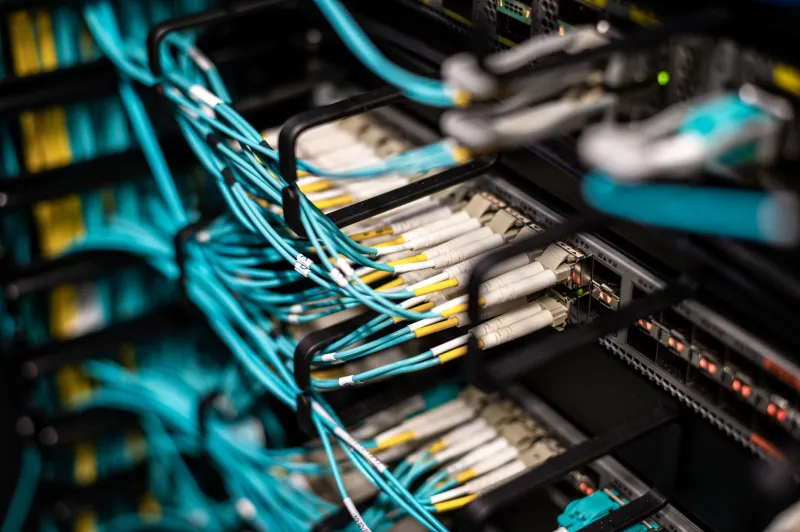
Photo by Photo by Taylor Vick on Unsplash on Unsplash
There is a particular kind of optimism that tends to precede a poorly planned infrastructure migration. Leadership approves the budget, the project timeline looks reasonable on a slide deck, and the promise of cloud agility feels close enough to touch. Then, six to eighteen months later, the same enterprise finds itself operating a hybrid environment that costs more to run than the legacy data center it was meant to replace — and delivering measurably less reliability in the process.
This is not an edge case. It is, increasingly, the median outcome for organizations that pursue modernization without first answering a foundational question: which workloads actually benefit from migration, and which ones will simply carry their dysfunction into a new environment at greater expense?
The Lift-and-Shift Illusion
The appeal of lifting and shifting — moving an application from on-premises infrastructure to a cloud or hybrid environment with minimal modification — is understandable. It appears to offer speed. It sidesteps the costly and time-consuming process of refactoring code, retraining teams, or rearchitecting data pipelines. For organizations under pressure to demonstrate modernization progress to boards and executive stakeholders, it produces visible movement quickly.
But speed without direction is not a strategy. When a legacy application is moved as-is into a cloud environment, it brings with it every inefficiency, every outdated dependency, and every architectural assumption that was baked in when it was first built — often a decade or more ago. Those applications were designed to run on dedicated hardware with predictable, static resource allocation. Cloud-native billing models, elastic compute, and distributed networking architectures are fundamentally incompatible with that design philosophy.
The result is an application that consumes cloud resources the way it consumed on-premises resources — inefficiently and at fixed scale — while now generating a variable, often unpredictable monthly bill. Organizations that expected to reduce infrastructure costs frequently report the opposite experience within the first year.
Technical Debt Does Not Disappear at the Border
One of the most persistent misconceptions in enterprise IT is that migration constitutes modernization. It does not. Migration is a change of address. Modernization is a change of architecture.
When legacy applications cross into a hybrid environment without structural remediation, the technical debt they carry does not evaporate — it compounds. Integration points that were marginally functional on-premises become genuine failure risks when stretched across cloud boundaries. Latency tolerances that were acceptable in a closed network become operational liabilities when data must traverse public or private interconnects. Security models built for a perimeter-based architecture become compliance gaps in a distributed environment.
Enterprise IT teams that inherit these migrated workloads often describe a similar experience: they spend more time managing the consequences of the migration than they ever spent managing the original system. Troubleshooting becomes exponentially more complex because incidents now span multiple environments, multiple vendors, and multiple layers of abstraction. The operational burden grows, and so does the headcount required to manage it.
Organizational Friction: The Cost That Rarely Appears on a Budget Sheet
Beyond the technical and financial dimensions, poorly planned hybrid migrations generate a category of cost that is genuinely difficult to quantify but impossible to ignore: organizational friction.
When a migration introduces new tools, new workflows, and new failure modes without adequate change management, the people responsible for keeping those systems running are placed in an untenable position. They are expected to support environments they were not trained for, using monitoring and management tools that were not designed for the workloads they are running. Institutional knowledge about how legacy systems behave does not automatically transfer to the new environment.
This friction manifests in slower incident response times, higher error rates during change windows, and a gradual erosion of confidence in the modernization program itself. In some organizations, it produces a quiet but significant retention problem, as experienced infrastructure engineers — frustrated by the gap between executive expectations and operational reality — begin looking elsewhere.
A Framework for Workload Evaluation
The alternative to lift-and-shift is not paralysis. It is deliberate sequencing, grounded in a rigorous assessment of each workload's characteristics before any migration decision is made.
A practical workload evaluation framework should address four dimensions:
Business criticality and change tolerance. Applications that underpin revenue-generating operations or regulatory compliance require a higher standard of evidence before any architecture change is approved. The cost of a degraded migration experience for a core ERP system is categorically different from the cost of the same experience for an internal reporting tool.
Architectural compatibility with target environments. Applications with stateless, modular designs are genuinely well-suited for cloud migration. Applications with tightly coupled components, large persistent data stores, or high-frequency transaction volumes may perform worse in a distributed environment than they do on optimized on-premises hardware.
Total cost of ownership across the full lifecycle. Migration cost is only one line item. Ongoing compute, storage, networking, licensing, and operational support costs must be modeled across a multi-year horizon before a migration is approved. Organizations that evaluate only migration cost consistently underestimate the true financial impact.
Optimization potential in place. Not every legacy application needs to move. Some workloads are better served by infrastructure modernization — upgrading the underlying hardware, improving storage performance, or containerizing the application layer — without a full migration to cloud infrastructure. Retaining a workload on-premises is not a failure of modernization ambition. In many cases, it is the correct strategic decision.
Bridging Today's Systems With Tomorrow's Architecture
The enterprises that navigate hybrid modernization most effectively are not the ones that move the fastest. They are the ones that move with the most clarity about what they are trying to achieve and why. They treat their existing application portfolio as a strategic asset to be evaluated, not a liability to be evacuated.
For US enterprises operating under pressure from competitive markets, regulatory requirements, and board-level expectations around digital transformation, the temptation to demonstrate progress through visible migration activity is real. But the organizations that will be best positioned in three to five years are those that resist that temptation long enough to build a modernization strategy grounded in workload-level analysis, total cost modeling, and honest assessment of their operational capabilities.
Moving a legacy system to a hybrid environment is easy. Moving it in a way that actually improves performance, reduces cost, and strengthens operational resilience is considerably harder — and considerably more valuable.