Neglect by Design: How Cloud-First Priorities Leave On-Premises Infrastructure to Decay on Its Own Schedule
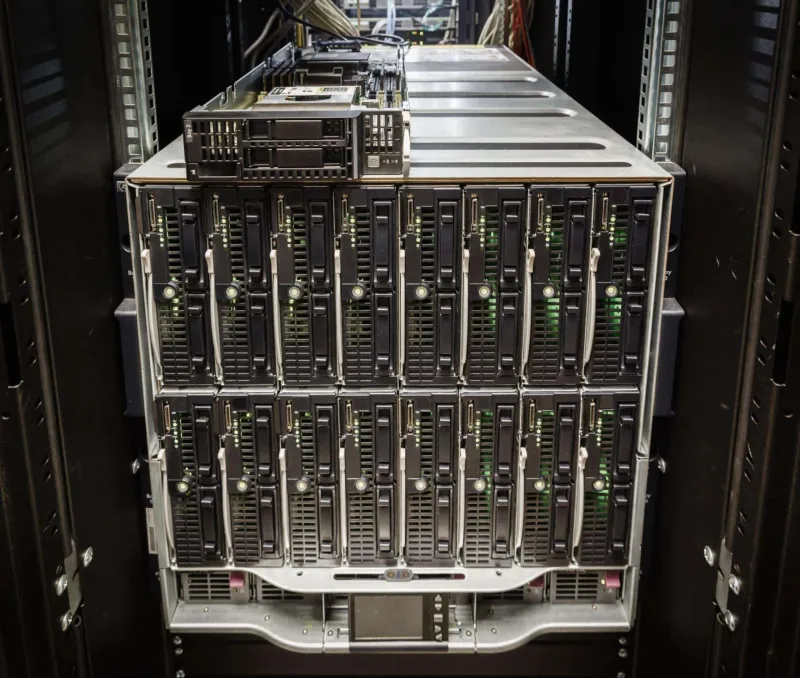
Photo: server room aging hardware data center maintenance inspection, via www.fivetk.com
There is a particular kind of organizational irony that plays out in enterprises several years into a cloud transformation: the very momentum that was supposed to reduce infrastructure complexity has, in practice, accelerated the deterioration of the systems it has not yet reached. The on-premises environment is not being replaced. It is being forgotten. And forgotten infrastructure does not age gracefully—it ages expensively.
This pattern has a name in some quarters: the upgrade treadmill. The term captures something real. Modernization efforts, when concentrated entirely on new environments, do not simply leave legacy systems in place. They actively deprive those systems of the attention, talent, and budget required to remain stable. The result is a two-speed infrastructure portfolio in which the modern side accelerates while the legacy side quietly degrades—until the degradation becomes impossible to ignore, and the cost of addressing it exceeds what a more balanced approach would ever have required.
Why Modernization Budgets Behave the Way They Do
Capital allocation in large enterprises tends to follow narrative momentum. When leadership has committed to a cloud-first strategy, budget conversations naturally favor initiatives that advance that narrative. Cloud migration projects produce visible milestones. They generate metrics that can be reported upward. They align with the direction the industry is moving, which makes them easier to defend in planning cycles.
Legacy infrastructure maintenance, by contrast, produces none of these things. A successful maintenance cycle is defined by the absence of incidents—a condition that is structurally difficult to make visible in a budget justification. The network upgrade that prevented a failure generates no headline. The storage refresh that extended the useful life of a critical system by three years does not appear on a transformation dashboard.
This asymmetry in visibility drives a gradual but consistent reallocation of resources away from on-premises environments, even when those environments continue to carry workloads that the business depends on. The systems do not stop running. They simply stop receiving the investment that would keep them running well.
The Compounding Mechanics of Infrastructure Neglect
Infrastructure decay is not linear. A system that receives adequate maintenance remains stable for a long time before it doesn't. But when maintenance is deferred—patching cycles slip, hardware refresh schedules are pushed, skilled staff are reassigned to cloud initiatives—the degradation accelerates in ways that are difficult to predict and expensive to reverse.
Several mechanisms drive this compounding effect:
Deferred patching creates expanding attack surfaces. Security vulnerabilities that would have been addressed in a regular patching cycle remain open. Each month of deferral increases the exposure window and, in many cases, the remediation complexity, as patches accumulate and must be applied in sequence rather than as individual updates.
Hardware operating beyond its refresh window fails unpredictably. Enterprise storage, networking, and compute hardware is designed with expected service lives. Operating beyond those windows does not simply increase failure probability—it introduces failure modes that are harder to diagnose and recover from, particularly when the engineers who understood the original configuration have moved on.
Talent drift amplifies technical risk. As an enterprise's best engineers migrate toward cloud projects—either by choice or by assignment—the institutional knowledge required to maintain legacy systems concentrates in an ever-smaller group. When members of that group leave, retire, or are reassigned, the organization discovers that the documentation it assumed existed does not, in fact, exist in any actionable form.
Vendor support timelines create hard deadlines. On-premises systems that have missed their refresh windows frequently run on software and hardware that is approaching or has already passed end-of-support. This creates compliance exposure, eliminates access to vendor assistance when failures occur, and forces emergency procurement decisions that carry significant cost premiums.
The Financial Case for Portfolio Balance
The financial argument for maintaining legacy infrastructure alongside active cloud investment is not sentimental. It is actuarial.
An on-premises system that receives consistent, appropriately scaled maintenance investment will generate a predictable cost profile over time. The same system, deprived of that investment, will generate an unpredictable one—with the probability of high-cost emergency interventions increasing as deferred maintenance accumulates. When those emergency costs are eventually incurred, they rarely appear in the budget line where the savings were originally taken. They surface as unplanned capital expenditures, extended recovery timelines, and, in the most serious cases, business disruption events that carry costs well beyond the IT budget.
A portfolio approach to hybrid infrastructure treats on-premises systems not as liabilities to be minimized but as assets to be actively managed. This requires, at minimum, three things that many enterprises currently lack:
A current, accurate inventory of on-premises systems with explicit refresh schedules. Not a theoretical CMDB that was accurate at deployment and has drifted since, but a living record that reflects the actual state of the environment and the actual timelines driving maintenance decisions.
A maintenance budget that is defended separately from transformation budget. Commingling these allocations creates the conditions under which maintenance loses every time, because transformation projects always carry more organizational urgency. Separating them forces an explicit conversation about what the enterprise is actually spending to keep its existing infrastructure functional.
Defined criteria for retirement vs. sustained investment. Not every on-premises system should be maintained indefinitely. But the decision to reduce investment in a system should be made deliberately—based on a clear timeline for migration or decommission—rather than by default, as attention drifts elsewhere.
Reframing the Modernization Conversation
The dominant narrative around cloud transformation in US enterprise IT tends to treat modernization as a destination: a future state in which legacy infrastructure no longer exists and all workloads run in managed cloud environments. For most large organizations, that destination is either decades away or permanently out of reach, given the complexity of the systems involved and the cost of migrating them.
A more useful frame is modernization as a continuous practice—one that includes not just the migration of workloads to new environments but the active management of the workloads that remain. This is not a conservative argument against cloud adoption. It is a practical argument for treating the entire infrastructure portfolio as a strategic asset, rather than treating the cloud portion as the asset and the on-premises portion as the problem.
Enterprises that allow their legacy infrastructure to decay while pursuing cloud transformation are not accelerating their modernization. They are creating a second, slower-moving crisis that will eventually demand resolution on terms far less favorable than a managed maintenance program would have required. The treadmill does not stop running simply because attention has shifted elsewhere. It just becomes harder to get back on.