The Overlooked ROI: Why Your Worst-Performing Systems May Be Your Greatest Modernization Opportunity
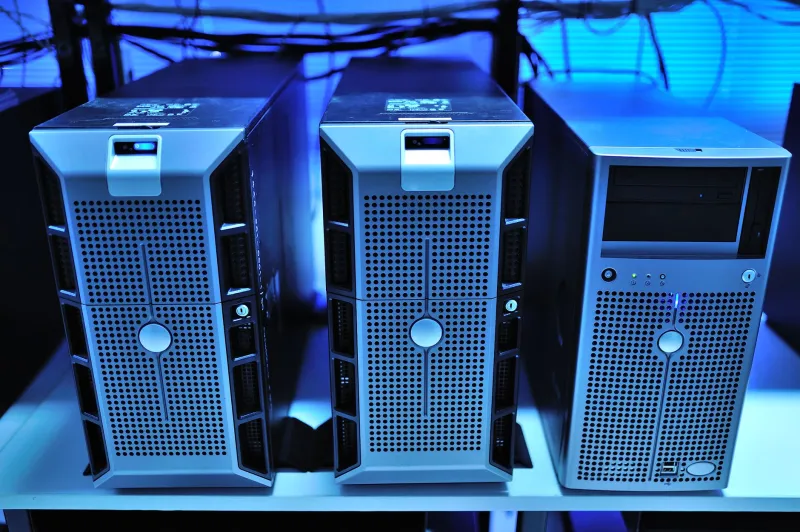
There is a familiar pattern in enterprise IT strategy: capital flows toward the systems that generate the most internal attention. New platforms, flagship applications, and cloud-native initiatives attract executive sponsorship, dedicated engineering teams, and carefully monitored KPIs. Meanwhile, a different category of infrastructure — aging, underperforming, and organizationally invisible — continues to consume budget, slow operations, and frustrate the people who depend on it daily.
The irony embedded in this dynamic is significant. The systems receiving the least investment are frequently the ones that would deliver the fastest and most measurable returns if modernized. For enterprises operating hybrid environments, where on-premises infrastructure coexists with cloud workloads across multiple business units, these overlooked systems represent a class of opportunity that most financial and technology leaders have not yet learned to see clearly.
Understanding why that blind spot exists — and how to eliminate it — is one of the more consequential strategic questions facing hybrid IT organizations today.
Why Underperformers Stay Hidden
The first obstacle is structural. In most large enterprises, technology ownership is fragmented across business units, each with its own budget authority, vendor relationships, and reporting hierarchies. A legacy claims processing system maintained by an insurance division's operations team, for instance, may never surface in a centralized IT portfolio review. Its costs are embedded in departmental budgets. Its performance problems are absorbed as routine friction. And its modernization potential is never evaluated against enterprise-wide priorities because no single stakeholder has both the visibility and the mandate to do so.
The second obstacle is perceptual. IT leaders tend to frame modernization decisions around systems that are already receiving attention — either because they support strategic initiatives or because they have recently caused a visible failure. Systems that degrade slowly and quietly rarely trigger the same urgency. Their inefficiency becomes normalized. Teams develop workarounds. Costs accumulate in ways that are difficult to attribute directly to the underlying infrastructure.
The third obstacle is methodological. Most hybrid IT environments lack the observability infrastructure necessary to connect workload performance data with financial impact at a granular level. Organizations can often tell you that a system is slow. They can rarely tell you, with precision, what that slowness costs — in labor hours, in downstream delays, in lost throughput, or in the opportunity cost of engineering capacity devoted to maintenance rather than innovation.
The Cost Structure Nobody Is Measuring
Consider what chronic underperformance actually produces in financial terms. A system that requires three times the manual intervention of a modernized equivalent is not simply an operational inconvenience. It is a recurring labor cost. A workload that runs inefficiently on aging on-premises hardware is not just a performance problem. It is a compounding infrastructure expense that grows as the hardware ages and as the gap between its capabilities and current workload demands widens.
Add to this the less visible costs: the integration complexity that accumulates when modern systems must accommodate legacy data formats and protocols, the compliance risk that increases as older platforms fall outside vendor support windows, and the talent cost of maintaining specialized knowledge of systems that the broader market has moved beyond.
When these costs are aggregated and attributed correctly, underperforming legacy systems frequently represent some of the highest-cost infrastructure in an enterprise portfolio. They are also, in many cases, the infrastructure where targeted modernization investment would generate the highest marginal return — precisely because the baseline is so low and the inefficiencies are so well-established.
Building a Methodology for Discovery
Identifying these hidden opportunities requires a deliberate approach that most enterprise IT organizations do not currently have in place. The following framework provides a practical starting point.
Step one: Map the full portfolio, not just the visible one. Conduct a comprehensive inventory that extends beyond centrally managed infrastructure to include departmentally owned systems, shadow IT, and workloads that have been running without formal review for more than three years. The goal is to surface assets that have fallen outside the normal governance process.
Step two: Establish a performance baseline for each workload. This means moving beyond uptime and availability metrics to capture throughput, error rates, manual intervention frequency, and integration latency. For systems that lack instrumentation, even structured interviews with the teams that operate them can surface meaningful performance data.
Step three: Attach financial context to performance data. For each underperforming system, estimate the fully loaded cost — including labor, infrastructure, licensing, compliance overhead, and the cost of downstream delays. This step requires collaboration between IT finance and operations teams, but it is essential for converting performance observations into business cases.
Step four: Model the modernization return. For the systems that emerge as high-cost, low-performance outliers, develop a modernization scenario that quantifies the expected improvement. This does not require a complete migration plan at this stage — a directional model that estimates labor savings, infrastructure cost reduction, and risk mitigation value is sufficient to establish relative priority.
Step five: Prioritize by payback period, not by strategic profile. The temptation in hybrid IT planning is to prioritize modernization investments that align with the current strategic narrative. A more disciplined approach ranks opportunities by the ratio of expected return to implementation complexity. Systems with short payback periods and well-understood modernization paths should move to the front of the queue, regardless of their organizational visibility.
What Enterprises Get Wrong About Priority
One of the most persistent errors in hybrid IT investment planning is the conflation of strategic importance with modernization urgency. A system can be strategically important and relatively well-optimized. It can also be strategically peripheral and profoundly inefficient. The second category often represents better near-term investment territory, particularly for organizations that need to demonstrate tangible financial returns from their modernization programs.
This is not an argument for ignoring strategic alignment. It is an argument for separating the question of what to modernize from the question of what to prioritize. Both questions matter. But answering only the first — and defaulting to the assumption that strategic systems should always come first — leaves a significant portion of available ROI on the table.
Turning Visibility Into Action
For hybrid IT leaders, the practical implication is straightforward: the portfolio review process needs to be expanded, the financial attribution methodology needs to be sharpened, and the prioritization framework needs to be decoupled from organizational politics.
None of this is technically complex. It requires discipline, cross-functional collaboration, and a willingness to direct analytical attention toward systems that have historically been treated as background noise. The organizations that develop this capability will find that their worst-performing infrastructure is not simply a liability to be managed. In many cases, it is the most actionable opportunity in their entire hybrid environment — one that has been hiding in plain sight, waiting for someone to look at it with the right framework and the right questions.
The efficiency gains are there. The returns are measurable. The methodology is available. What has been missing, for most enterprises, is the organizational will to start looking where the answers actually are.