The Hidden Tax of Connectivity: When System Integration Costs More Than It Saves
The logic seems self-evident: two systems sharing data through a common integration layer must be more efficient than two systems operating in isolation. It is a premise so widely accepted in enterprise IT that it rarely surfaces for serious scrutiny. Yet for a significant number of organizations, the integration architectures they have built over the past decade have become some of the most expensive line items in their operational budgets—often without anyone explicitly authorizing that expenditure.
This is the integration debt trap. It does not announce itself. It accumulates quietly, one custom connector at a time, one point-to-point API at a time, until the cost of maintaining the connections between systems exceeds the cost of simply running those systems independently.
The Architecture That Nobody Audited
Most enterprise integration projects begin with a legitimate business case. A finance platform needs to exchange records with a procurement system. A CRM needs to surface data from a legacy order management application. In isolation, each of these connections is reasonable. The problem emerges when those connections multiply without a governing architecture to manage their collective weight.
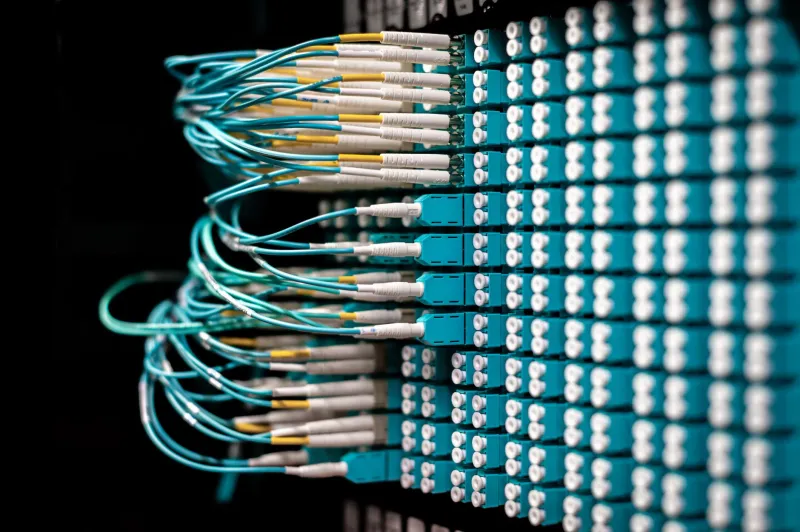
The result is what integration architects sometimes call a spaghetti topology: a web of bilateral connections, each maintained by different teams, built on different middleware generations, and governed by different versioning disciplines. When one system undergoes an upgrade, the ripple effect across its connected endpoints can consume more engineering hours than the upgrade itself. The integration layer, intended to reduce friction, has become the primary source of it.
In hybrid IT environments, this dynamic is significantly amplified. Cloud-based systems operate on update cadences that on-premises applications were never designed to accommodate. When a SaaS vendor pushes a breaking API change, every on-premises system connected to that endpoint becomes a potential incident. The enterprise is now paying a continuous operational tax on connectivity decisions made years earlier, often by teams that no longer exist.
Measuring What Integration Actually Costs
The financial case for integration is almost always built on projected savings: reduced manual data entry, eliminated reconciliation processes, faster reporting cycles. These projections are rarely wrong at inception. The error lies in treating integration as a one-time capital expense rather than an ongoing operational commitment.
A more accurate cost model accounts for several categories that traditional business cases tend to omit. First, there is the maintenance cost of keeping each integration functional across system updates on both ends of the connection. Second, there is the incident cost associated with integration failures—outages that may affect multiple downstream systems simultaneously. Third, there is the opportunity cost of engineering talent consumed by integration maintenance rather than directed toward higher-value modernization work.
When these costs are aggregated across a large enterprise integration portfolio, the totals frequently surprise even experienced IT finance teams. A connection that saved an estimated $200,000 annually in manual processing may be consuming $350,000 in annual maintenance, monitoring, and incident response. The net position is not a savings. It is a liability.
When Isolation Is the Correct Answer
The strategic question enterprises need to ask is not whether two systems can be integrated, but whether the long-term cost of that integration is justified by the value it produces. In many cases, the honest answer is no.
Systems that operate on fundamentally different data models are particularly prone to generating expensive integration overhead. When the transformation logic required to reconcile two data schemas is sufficiently complex, the integration layer itself becomes a system requiring its own documentation, testing, and governance. The organization has not connected two systems—it has built a third one.
Isolation, by contrast, carries a different set of costs but often a more predictable and manageable profile. A system that operates independently requires no connector maintenance, generates no cross-system incidents, and imposes no update coordination burden on adjacent teams. The inefficiencies of isolation—manual data transfers, periodic reconciliation processes—are visible and schedulable. The costs of a poorly architected integration are often neither.
This does not mean integration is categorically inadvisable. It means that integration decisions should be subjected to the same rigorous cost-benefit discipline applied to infrastructure procurement. The burden of proof should rest with connectivity, not isolation.
Building a Decision Framework for Integration Choices
Enterprises that want to avoid the integration debt trap need an evaluation process that goes beyond asking whether a connection is technically feasible. Several criteria should anchor that process.
Data exchange frequency and volume matter significantly. Systems that need to share data in real time have a stronger case for direct integration than systems that could satisfy their requirements through nightly batch transfers. Batch processes are less elegant but considerably cheaper to maintain.
Schema stability on both ends of a proposed connection is another critical variable. If either system is scheduled for significant modification within the next 18 to 24 months, the integration architecture may be obsolete before it is fully operational. In that scenario, a temporary manual process may represent better capital stewardship than an integration investment with a short useful life.
Ownership clarity determines whether integration costs will actually be tracked and managed. Connections that fall between organizational boundaries—where neither the source system team nor the destination system team accepts clear ownership—tend to accumulate technical debt at an accelerated rate. If no team can be assigned unambiguous accountability for an integration's health, that is a strong indicator that the integration should not be built.
Rationalizing an Existing Integration Portfolio
For enterprises that already carry a substantial integration estate, the priority is rationalization rather than prevention. This begins with an honest inventory: how many active integrations exist, what systems do they connect, who owns them, and what is the current cost of maintaining each one.
That last question is rarely answered with precision, because integration maintenance costs are typically absorbed into general engineering budgets rather than attributed to specific connections. Making those costs visible is itself a significant governance improvement. When a team can see that a particular integration is consuming 15 percent of its quarterly capacity, the conversation about whether that connection is worth maintaining becomes considerably more concrete.
Integrations that survive rationalization should be migrated toward standardized patterns—event-driven architectures, managed API gateways, or enterprise service bus platforms—that reduce the bespoke maintenance burden of point-to-point connections. Connections that cannot justify their costs in that light should be candidates for decommissioning, even if that means accepting some operational inconvenience in the short term.
Connectivity as a Strategic Investment, Not a Default
The hybrid IT environment rewards intentionality. Organizations that treat integration as a default response to any data-sharing requirement will continue to accumulate connectivity costs that compound quietly until they become unmistakable. Those that treat integration as a strategic investment—one that requires a defensible business case, a clear ownership model, and a realistic total cost of ownership estimate—will find that their architectural decisions age considerably better.
The goal is not fewer integrations. It is better ones. And sometimes, the best integration decision is the one you choose not to make.